
Origins in 2008
Border Partners (BP) was organized in November, 2008 in response to the poverty in Luna County, NM and in Palomas, Chihuahua, MX across the border. The region has a high unemployment rate and the jobs that exist are low-paying. Utilities in Mexico are very expensive. “Drug wars” brought violence to the Mexican side of the border for months during the preceding year and many young people were killed. Others, while grieving for lost friends and relatives, saw their jobs disappear as families with money left town.
Border Partners founders, Peter and Polly Edmunds and Helena Myers--all of Luna County, New Mexico--wanted to initiate action to improve lives of the people in the area. Meeting with a group of Palomas families, they learned that the most urgent needs in the community were lack of jobs and poor health care services. They formed a group to encourage the development of businesses by providing education and resources to individuals and small groups. The workers would manage these businesses themselves. The goal was to provide good work with decent wages. In addition, they wanted to teach people about healthy lifestyles and promote the use of sustainable technologies–such as solar power, water re-use, home gardens, and more to save people money, use less water and improve health.
The first two activities were research into very low-cost, solar cooking units and the development of a sewn product that could be made at home by women in Palomas. Border Partners developed their own solar oven model and began holding workshops to train people to build and use cookers. This led to the development of health workshops that promoted dental hygiene and nutrition. Also in the fall of 2008, BP volunteers began working with two women in Palomas who were part of a cooperative there, knew how to sew and needed more income to support their families, to start selling their Oilcloth products in the USA.
Our early projects sparked an ongoing conversation with the border community, one shaped by the philosophy that continues to guide Border Partners: to support people in developing the skills, resources, and leadership they need to create lasting change in their own community. In the years since 2008, we have developed significant institutional capacity and local ownership over our different projects. Read on to learn more about Border Partners through the years:
Tackling practical solutions
2009-2013
| Our earliest projects focused on practical, affordable ways to improve everyday life. We introduced home gardens, sustainable technologies, health education, and other projects designed to make families healthier and more self-sufficient. As these early efforts grew, so did our understanding of what the community needed.
By the early 2010s, Border Partners was supporting gardens and building greenhouses, expanding health education, computer access, recreation, offering summer programs, and making improvements to community facilities. We established a computer and education center, expanded access to computers and the internet, and supported the development of local health educators known as promotoras.
Building community resources
2014-16
| Over the next several years, Border Partners expanded its programs while continuing to emphasize practical, community-based solutions.
Home and school gardens grew from a small experiment into an important part of our work. Health education expanded through the promotoras, who organized health fairs, taught nutrition and healthy-living classes, conducted health screenings, and reached families and schools throughout Palomas. Education and recreation opportunities also grew, with computer programs, summer school, sports facilities, exercise classes, and activities for children, teens, and seniors.
By 2015, dozens of families were maintaining gardens, the Education Center was serving hundreds of visitors each month, and Border Partners' programs had become an established part of community life.
Local leadership takes root
2017-19
| As Border Partners grew, an important goal became increasingly central: the work should ultimately belong to the community itself.
Beginning with local coordinators, gardeners, educators, and promotoras, Border Partners always invested in the leadership and skills of people in Palomas. By 2017, a strong team of local leaders was taking major responsibility for planning and carrying out projects: a significant step toward our long-term commitment to having Mexican community members take over all aspects of the work.
Ten years after Border Partners began, the changes in Palomas were visible across many areas of community life. Children and families had access to nutrition education and sports; schools had gardens, computers, and internet access; residents could use community technology and recreation facilities; and more than 150 families had participated in home gardening. Programs that did not exist in 2008 had become part of the community's everyday resources.
Pandemic response & program expansion
2020-22
| In 2020, the COVID-19 pandemic changed life in Palomas and required Border Partners to adapt quickly. With work scarce and many families and isolated seniors facing food insecurity, our staff shifted much of their work toward meeting immediate needs.
Border Partners prepared and delivered thousands of healthy meals to isolated seniors and distributed food baskets to families in Palomas and surrounding communities. At the same time, promotoras continued providing health screenings, covid tests, and exercise opportunities, and and continued growing food in community greenhouses.
By 2022, we resumed and expanded many community activities, including expanding health and nutrition education in schools, food assistance, hosting sports and bicycle events, gardening, summer school, senior gatherings, and access to computers and the internet.
Growing the partnership
2022-Today
Border Partners has changed considerably since 2008. What began with a small group of people looking for practical ways to respond to economic and health challenges has grown into a broad network of community programs.
In recent years, we have started new projects focused on supporting disconnected youth at our Youth Center “Inspira,” with skill-building classes and mentorship opportunities, experimented with papercrete as a sustainable alternative to concrete buildings, and launched a diabetes education program for vulnerable community members.
The heart of our work remains: listen to the community, support local initiative, share knowledge and resources, and build toward greater local leadership and self-reliance. Our history, as much as it is a list of accomplishments, is also a story of people in Palomas developing new skills, taking on leadership, and creating opportunities for their families and neighbors. It is a partnership that continues to evolve with the community.
We are grateful to everyone—community members, local leaders, volunteers, staff, donors, and partners—who has helped make that journey possible.
Explore our annual reports to learn more about the programs, people, and impact behind each chapter of our history.
Working Together. Creating Opportunity. Improving Lives.
Polly and Peter Edmunds
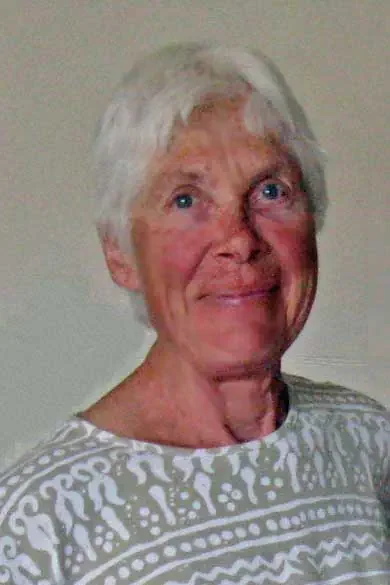
Helena Myers